


Some error occured while loading the Quick View. Please close the Quick View and try reloading the page.
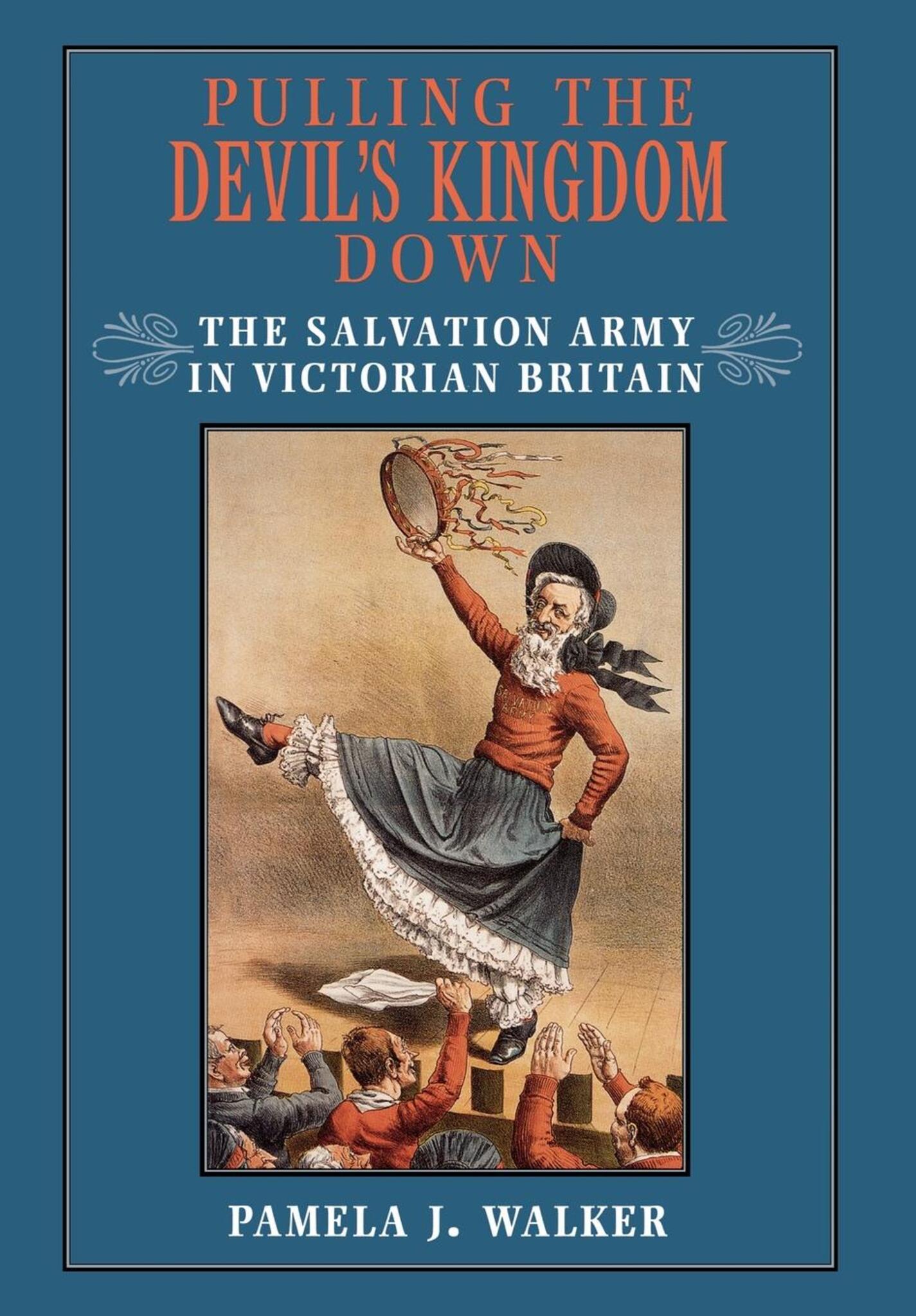
Those people in uniforms who ring bells and raise money for the poor during the holiday season belong to a religious movement that in 1865 combined early feminism, street preaching, holiness theology, and intentionally outrageous singing into what soon became the Salvation Army. In Pulling the Devil's Kingdom Down, Pamela Walker emphasizes how thoroughly the Army entered into nineteenth-century urban life. She follows the movement from its Methodist roots and East London origins through its struggles with the established denominations of England, problems with the law and the media, and public manifestations that included street brawls with working-class toughs.
The Salvation Army was a neighborhood religion, with a "battle plan" especially suited to urban working-class geography and cultural life. The ability to use popular leisure activities as inspiration was a major factor in the Army's success, since pubs, music halls, sports, and betting were regarded as its principal rivals. Salvationist women claimed the "right to preach" and enjoyed spiritual authority and public visibility more extensively than in virtually any other religious or secular organization. Opposition to the new movement was equally energetic and took many forms, but even as contemporary music hall performers ridiculed the "Hallelujah Lasses," the Salvation Army was spreading across Great Britain and the Continent, and on to North America. The Army offered a distinctive response to the dilemmas facing Victorian Christians, in particular the relationship between what Salvationists believed and the work they did. Walker fills in the social, cultural, and religious contexts that make that relationship come to life.
The Salvation Army was a neighborhood religion, with a "battle plan" especially suited to urban working-class geography and cultural life. The ability to use popular leisure activities as inspiration was a major factor in the Army's success, since pubs, music halls, sports, and betting were regarded as its principal rivals. Salvationist women claimed the "right to preach" and enjoyed spiritual authority and public visibility more extensively than in virtually any other religious or secular organization. Opposition to the new movement was equally energetic and took many forms, but even as contemporary music hall performers ridiculed the "Hallelujah Lasses," the Salvation Army was spreading across Great Britain and the Continent, and on to North America. The Army offered a distinctive response to the dilemmas facing Victorian Christians, in particular the relationship between what Salvationists believed and the work they did. Walker fills in the social, cultural, and religious contexts that make that relationship come to life.

Price: $57.95
Pages: 352
Publisher: University of California Press
Imprint: University of California Press
Publication Date:
02 April 2001
Trim Size: 9.00 X 6.00 in
ISBN: 9780520225916
Format: Hardcover
BISACs:
Pamela J. Walker is Associate Professor of History at Carleton University, Ottawa. She coedited Women Preachers and Prophets through Two Millennia of Christianity (with Beverly Mayne Kienzle, California, 1998).
List of Illustrations
Acknowledgments
Introduction
1. The Roots of the Salvation Army: The Booths, Methodism, and Female Ministry
2. Creating the Salvation Army
3. Conversion: Theology and Narratives
4. Saving Souls: Salvationists at Work
5. Authority and Transgression: The Lives of Maud Charlesworth, Effie Anthon, and Rebecca Jarrett
6. Robbing the Devil of His Choice Tunes: Converting the Culture of Working-Class Neighborhoods
7. Disorderly Champions of Order: Opposition to the Salvation Army
Postscript : The Legacy of the Salvation Army
Notes
Bibliography
Index
Acknowledgments
Introduction
1. The Roots of the Salvation Army: The Booths, Methodism, and Female Ministry
2. Creating the Salvation Army
3. Conversion: Theology and Narratives
4. Saving Souls: Salvationists at Work
5. Authority and Transgression: The Lives of Maud Charlesworth, Effie Anthon, and Rebecca Jarrett
6. Robbing the Devil of His Choice Tunes: Converting the Culture of Working-Class Neighborhoods
7. Disorderly Champions of Order: Opposition to the Salvation Army
Postscript : The Legacy of the Salvation Army
Notes
Bibliography
Index